MLPs Tax Guide: Essential Investor Insights

Master limited partnerships (MLPs) are partnerships whose units trade on an exchange like shares. Because they are taxed as partnerships rather than corporations, they do not pay entity-level income tax; instead each unitholder receives a Schedule K-1 reporting their share of the partnership's income, deductions and distributions, and the cash distributions themselves are treated very differently from dividends. That structure is the source of both the appeal and the paperwork. This guide explains, from the Internal Revenue Code and IRS publications, how an MLP keeps partnership status, why most distributions are not taxed when received, what the K-1 reports, how a sale of units is taxed, how the qualified business income deduction and retirement-account rules interact with MLP income, and how to track MLP holdings and distributions in Quant Charts. It is educational only; MLP taxation is fact-specific, and the numbers below are hypothetical.
What Makes an MLP
Under section 7704 of the Internal Revenue Code, a publicly traded partnership, meaning one whose interests trade on an established securities market or are readily tradable on a secondary market, is treated as a corporation for tax purposes. The exception that MLPs rely on is the qualifying income test: the partnership escapes corporate treatment for a year only if 90 percent or more of its gross income for that year and every prior year since 1987 consists of qualifying income. The statute lists interest, dividends, real property rents, gains from real property, and income and gains from the exploration, development, mining, production, processing, refining, transportation or marketing of minerals and natural resources, among other categories. That is why most MLPs are midstream energy businesses such as pipelines and storage: the income they earn is on the list.
The partnership has a general partner that runs the business and limited partners, the public unitholders, who supply capital. Distributions are set by the partnership agreement and paid in cash, usually quarterly.
Why Distributions Are Mostly Deferred
A partner is taxed on their distributive share of the partnership's income each year, whether or not it is distributed, and that share is reported on the K-1. The cash distribution is a separate event. IRS Publication 541 states the rule: a partner's adjusted basis in the partnership interest is decreased, but not below zero, by the money and adjusted basis of property distributed to the partner. A distribution is generally not taxable when received as long as it does not exceed the partner's basis; it reduces basis instead. Because MLPs typically report depreciation and other deductions that make taxable income much smaller than the cash they pay out, a large part of each distribution tends to be a return of capital that lowers basis rather than income taxed in the year it arrives. The proportion varies by partnership and by year, and it is reported to you rather than something to assume.
Basis moves in both directions. Publication 541 lists the increases, which include the partner's distributive share of taxable income and their share of partnership liabilities, and the decreases, which include distributions, the partner's share of losses and nondeductible expenses. Two consequences follow. First, deferral is not exemption: every dollar of basis reduction shows up as additional gain when the units are sold. Second, once basis reaches zero, further distributions are no longer sheltered and are taxed as gain from the sale of the interest.
Schedule K-1
Schedule K-1 (Form 1065) has three parts: Part I identifies the partnership, Part II identifies the partner and reports the partner's share of profit, loss and capital along with a capital account analysis, and Part III lists the partner's share of current-year income, deductions, credits and other items by box. For MLP unitholders the boxes that matter most are Box 1 ordinary business income or loss, the portfolio income boxes for interest and dividends, Box 19 distributions, where code A reports cash and marketable securities, and Box 20 other information, which carries coded statements including code Z for section 199A information, code AB for section 751 gain or loss on a disposition, and code AO for publicly traded partnership information.
The partner's instructions single out publicly traded partnerships for a special passive activity rule: the limitations are applied separately to each PTP, so a net passive loss from one MLP cannot be deducted against other passive income. It is suspended and carried forward to be applied against income from the same PTP in later years, and it is released when the partner disposes of the entire interest. An overall gain from a PTP, by contrast, is treated as nonpassive income. Because MLP K-1s report income allocated across the states in which the partnership operates, unitholders may also have state filing obligations that depend on each state's rules and thresholds; the K-1 package normally includes a state allocation schedule.
K-1s arrive later than 1099s, often in March, and are frequently corrected. Filing an extension is a routine response, not a failure, and keeping every year's K-1 matters because the basis history they document is what the sale calculation depends on.
Selling Units
Gain or loss on a sale is the amount realized minus adjusted basis, and the basis has been shaped by years of distributions and allocations. Part of that gain is not capital gain. Publication 541 explains that unrealized receivables include property subject to recapture of depreciation under sections 1245 and 1250, and that any gain attributable to unrealized receivables and inventory items on the sale of a partnership interest is ordinary. The partnership reports the ordinary portion to the seller as section 751 gain, and the remainder is capital gain or loss with the usual holding-period rules.
A hypothetical illustrates the split. Suppose a unitholder buys 1,000 units for 30,000, receives 2,500 of distributions over the holding period, is allocated 500 of net taxable income and 1,500 of depreciation deductions, and sells for 32,000. Adjusted basis is 30,000 minus 2,500 plus 500 minus 1,500, which is 26,500, so total gain is 5,500. If the partnership reports 1,500 of section 751 recapture, that 1,500 is ordinary income and the remaining 4,000 is capital gain. The figures are invented to show the mechanics; the real ones come from the K-1 sales schedule.
| Feature | MLP units | Corporate shares |
|---|---|---|
| Entity-level tax | None if the 90 percent qualifying income test is met | Corporate income tax, then tax on dividends |
| Annual reporting | Schedule K-1 (Form 1065), typically in March | Form 1099-DIV, typically in February |
| Cash payments | Distributions reduce basis; taxable once basis is exhausted | Dividends taxed in the year received |
| Income taxed annually | Distributive share of partnership income, whether or not distributed | None beyond dividends |
| On sale | Section 751 ordinary income plus capital gain or loss | Capital gain or loss |
| Losses | Suspended per PTP until income from the same PTP or full disposition | Capital losses under normal rules |
| In an IRA | Partnership business income may be unrelated business taxable income | No UBTI issue for ordinary dividends |
The Qualified Business Income Deduction
The IRS describes the qualified business income deduction under section 199A as having two components. The QBI component equals 20 percent of qualified business income from a domestic business operated through a partnership, S corporation, sole proprietorship, trust or estate, subject to limitations that depend on taxable income, W-2 wages and qualified property. The second component is 20 percent of qualified real estate investment trust dividends and qualified publicly traded partnership income, which is what makes the deduction relevant to MLP unitholders. Section 199A defines qualified PTP income to include the partner's allocable share of qualified items from a PTP that is not treated as a corporation, plus gain on disposition of the interest to the extent it is section 751 ordinary income. The partnership reports the figures needed on the K-1 under Box 20 code Z, and the deduction is claimed on Form 8995 or 8995-A. Whether and how much you can claim depends on your own return, so the current-year form instructions govern.
MLPs in Retirement Accounts
Holding MLP units in an IRA does not make the partnership income disappear. IRS Publication 598 lists individual retirement arrangements, including traditional, Roth, SEP and SIMPLE IRAs, among the organizations subject to the tax on unrelated business income, and a partner's share of a partnership's trade or business income is treated as unrelated business taxable income to the exempt partner. The publication provides a specific deduction of 1,000 in computing the tax, and an exempt organization or IRA with gross unrelated business income above the filing threshold files Form 990-T, which for an IRA is handled by the custodian and paid from the account. Whether a particular MLP position generates enough business income to matter depends on the K-1 allocations, and the custodian's fees for preparing the return can exceed the tax.
Funds that hold MLPs and are organised as corporations issue Form 1099 rather than K-1s and do not pass UBTI through to an IRA, at the cost of entity-level tax inside the fund. That trade-off, not the label on the product, is the comparison to make.
Where Quant Charts Fits
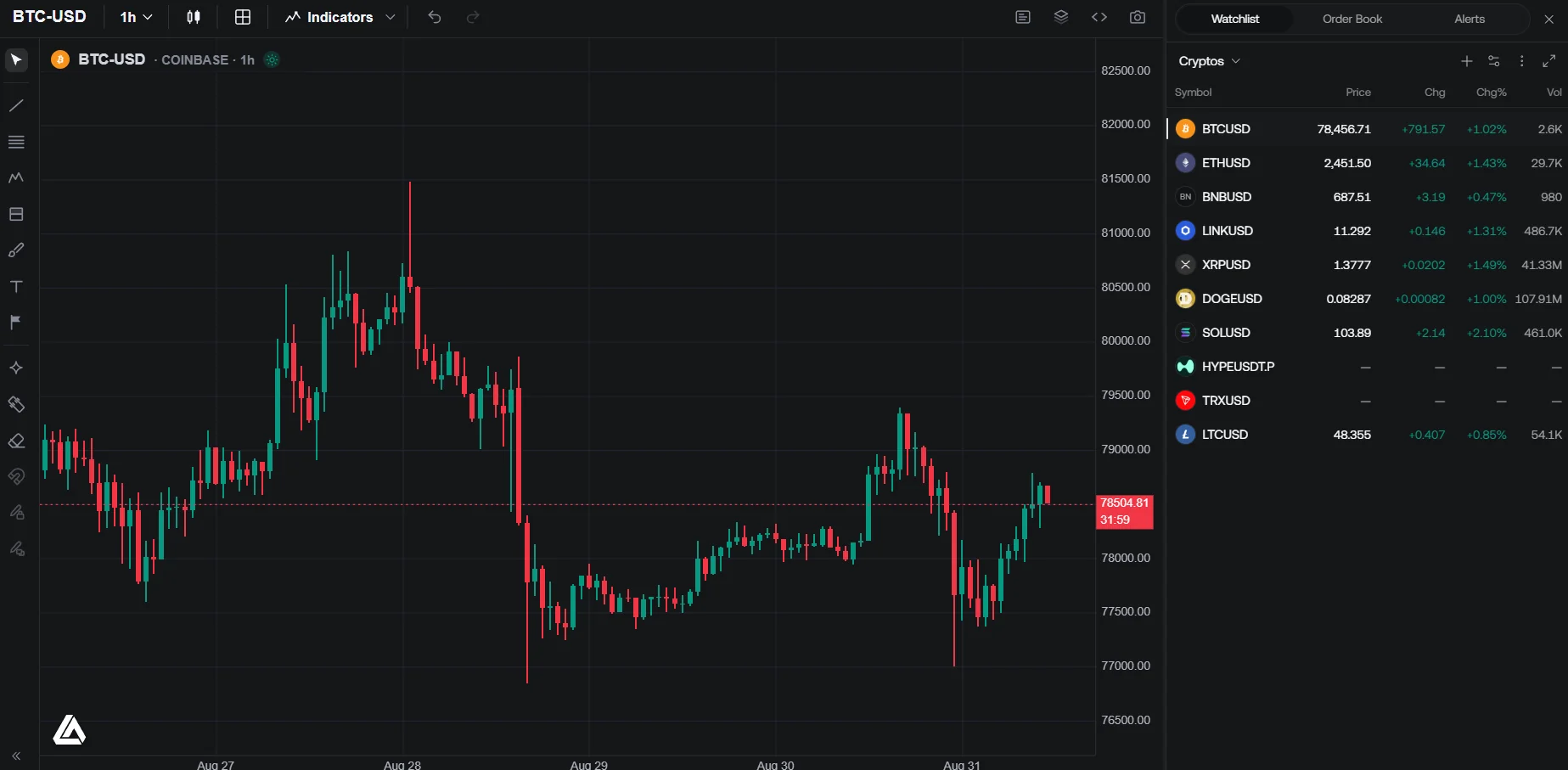
Compare distribution rates in the watchlist. Build a watchlist of the MLPs you own or follow and open the Advanced view, which has Price, Financials and News tabs. The Financials tab reports revenue, net income, EPS, P/E, dividend per share, yield and beta for stocks, so the cash distribution rate can be compared across units on one screen, and Sections let you group MLP holdings apart from the rest of the list. Quant Charts uses Cboe EDGX data for US equities including ETFs on every plan.
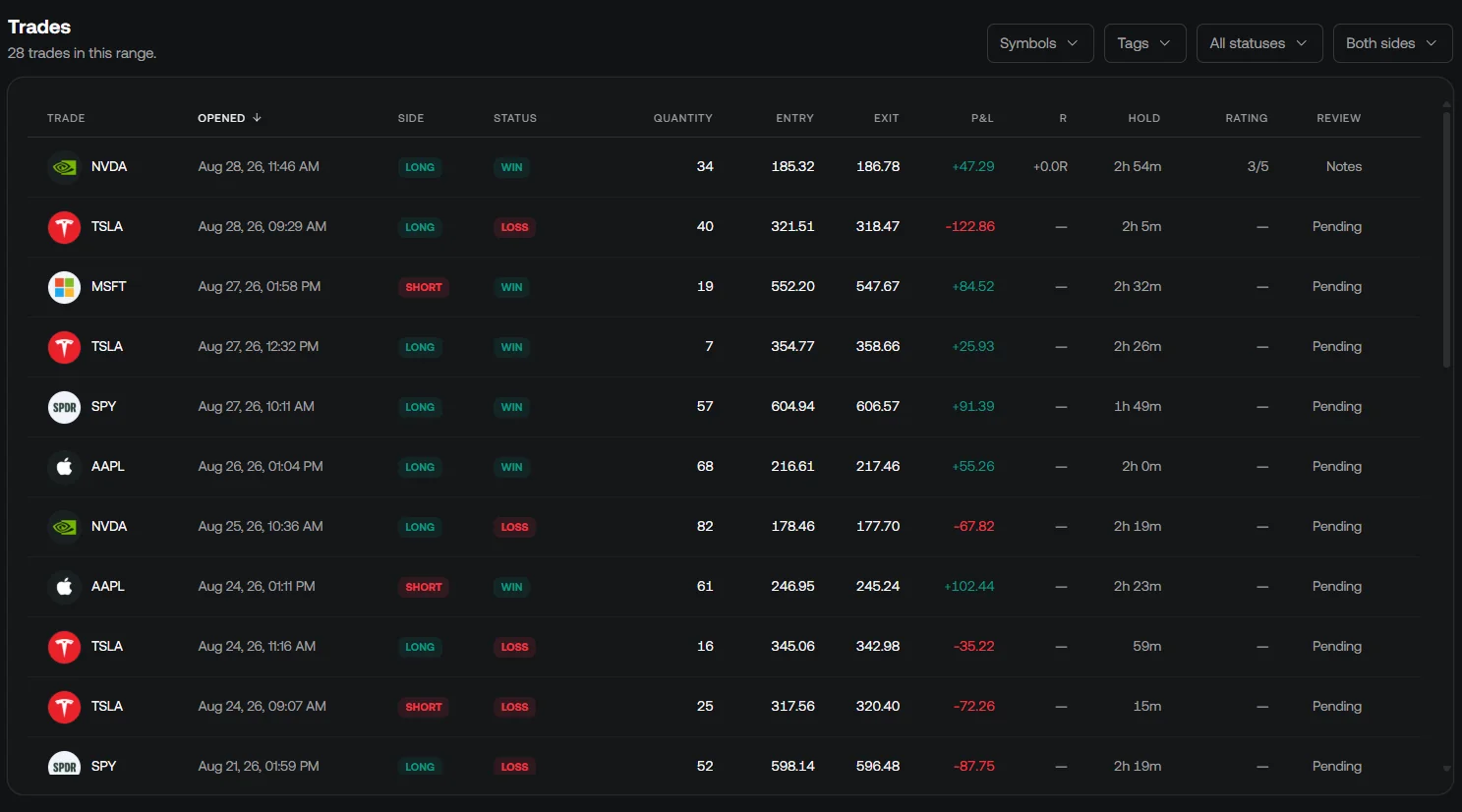
Record purchases and distributions in the Journal. Every plan includes the Journal, which turns broker fills into round trips and also accepts imports and manual accounts with a starting balance. Because the tax basis of MLP units depends on the full history of purchases, distributions and K-1 allocations, keeping the trade record in one place alongside the K-1s makes the sale calculation reconstructible. The Journal reports trading statistics; it does not compute tax basis or generate tax forms.
The video below shows how an indicator is added to a chart in Quant Charts.
Test the price side of an income rule. If your approach to MLPs includes a timing element, such as buying after a pullback to a long moving average, describe the rule to Quant, our coding agent, in plain language. Quant writes the Pine Script; open Code to inspect it, then click Run. The Backtest Summary reports net profit, trade count, win rate, max drawdown and profit factor, with commission and slippage set in the strategy's Properties. The backtest sees price, not distributions or taxes, so its result is the price return of the timing rule and nothing more.
What the platform does not do. No LuxAlgo tool places orders, tracks tax basis, reads K-1s or gives tax advice. Quant Charts is where the holdings, their distribution rates and your trade record live; the tax work belongs with the K-1 package and a professional.
FAQs
What is a master limited partnership?
A partnership whose units trade publicly. Section 7704 treats such partnerships as corporations unless 90 percent or more of gross income is qualifying income, such as income from natural resource transportation, processing and storage, which is why most MLPs are midstream energy businesses.
Why are MLP distributions often not taxed when received?
Because a partnership distribution reduces the partner's basis in the interest rather than being income, as long as it does not exceed basis. The unitholder is taxed each year on their share of partnership income, which is usually smaller than the cash distributed, and the deferred amount becomes gain when the units are sold.
What does the Schedule K-1 report?
Part I identifies the partnership, Part II the partner and their capital account, and Part III the partner's share of income, deductions and other items by box, including Box 1 ordinary business income, Box 19 distributions and Box 20 coded information such as section 199A data and section 751 gain.
How is a sale of MLP units taxed?
Gain is the amount realized minus adjusted basis after years of distributions and allocations. The portion attributable to depreciation recapture and other unrealized receivables is ordinary income under section 751, reported by the partnership, and the remainder is capital gain or loss. Suspended passive losses from that PTP are released on a full disposition.
Can I hold MLPs in an IRA?
You can, but IRAs are subject to the unrelated business income tax, and a partner's share of partnership business income is unrelated business taxable income. Publication 598 provides a specific deduction of 1,000, and Form 990-T is filed by the custodian when the threshold is exceeded. Funds organised as corporations avoid the issue by paying tax at the fund level.
How can Quant Charts help with MLP holdings?
The watchlist Advanced view's Financials tab shows dividend per share and yield for comparing distribution rates, Sections group MLP holdings, and the Journal keeps the trade record that a basis calculation is checked against. The platform does not compute tax basis or provide tax advice.
References
LuxAlgo Resources
- Watchlist Advanced view, Journal accounts and imports, Making strategies with Quant and Data (LuxAlgo Docs)
External Resources
- 26 U.S. Code § 7704, Certain publicly traded partnerships treated as corporations (Cornell Legal Information Institute)
- Publication 541, Partnerships (IRS)
- Partner's Instructions for Schedule K-1 (Form 1065) (IRS)
- Publication 598, Tax on Unrelated Business Income of Exempt Organizations and About Form 990-T (IRS)
- Qualified Business Income Deduction and Instructions for Form 8995 (IRS); 26 U.S. Code § 199A (Cornell Legal Information Institute)
This article is educational and is not tax, legal or investment advice. The numerical example is hypothetical. MLP taxation depends on the partnership's reporting and your own circumstances; consult the current IRS instructions and a qualified tax professional.
Read next