Change-Point Detection (CUSUM)
 By LuxAlgoFeb 17, 2026
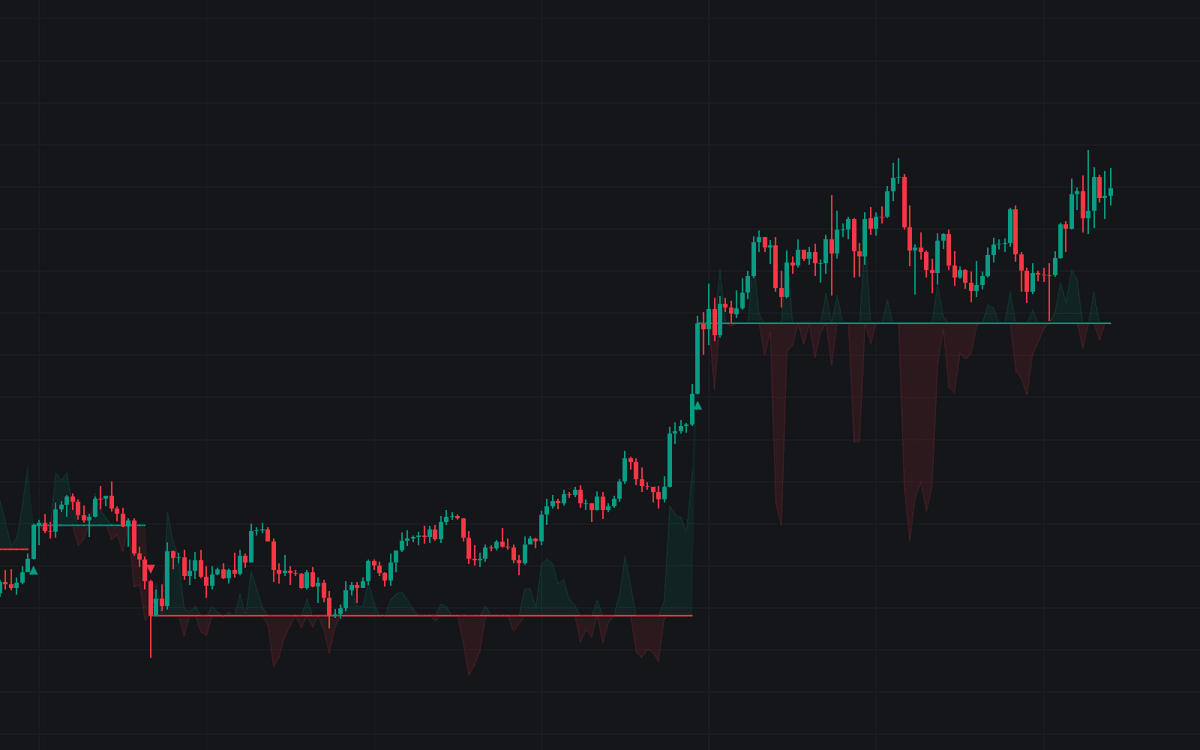

Change-Point Detection (CUSUM) hunts for the bar where a market's statistical behavior actually changes. A modified cumulative-sum procedure (the workhorse of change-point detection in quality control) standardizes log-returns into z-scores, the same yardstick used in outlier detection, and accumulates every deviation that clears a slack filter. When the accumulated pressure crosses a statistical threshold, a new regime is confirmed at that price, no moving-average lag involved.
How to Trade the Change-Point Detection (CUSUM)?
- Green regime line: bullish regime; the line marks the price where the last change-point confirmed and serves as the structural baseline.
- Red regime line: bearish regime, the same logic mirrored.
- Pressure bands (sPos and sNeg): shaded accumulation against the current regime. Steady growth signals instability building before any flip.
- Triangle markers: pressure exceeded the threshold; the regime flips, the accumulators reset, and a new baseline prints.
Trade fresh regimes directionally, trim exposure as opposing pressure swells, or let the regime state pick between trend-following and mean-reversion playbooks. Confirmed change-points do not repaint.
Change-Point Detection (CUSUM) Settings
- Lookback Period: rolling window for the mean and standard deviation; shorter reacts faster, longer stabilizes detection.
- Threshold (h): pressure required to confirm a change-point. Higher values favor durable structural shifts, lower values catch shorter rotations.
- Slack (k): minimum deviation before anything accumulates; raising it filters sideways noise and premature triggers.
- Dashboard: enable the readout and set its position and size.
Frequently Asked Questions
Free indicator
Get free access to this indicator on the platforms below.

The Library is free. Quant makes it yours.
Pull any concept or indicator into Quant: rebuild it, retune it, or turn it into a backtested strategy of your own.